
A Methodology Built on Participatory Action Research (PAR) and Conceptual Events (CE).
The Mbuntu Method operates as a think tank first, a research institution with an applied field practice, not a field programme with a research department attached. The Mbuntu Method is the framework that makes this possible: a way of producing evaluable knowledge from community-held systems, wherever they exist, and feeding it back into how those systems, and the institutions that fund, govern, or regulate them, are designed. The Method isn't specific to finance. It was developed and tested first in health, through HIV/AIDS programming in East Africa decades before Mbuntu's current financial-systems work began, and it's built to travel to any domain where formal institutions could learn something from systems communities have already built and refined themselves, mining, land use, and health among them, not only community finance.

Participatory Action Research (PAR) is the Method's core methodology, the mechanism through which knowledge actually gets produced, regardless of subject matter. In PAR, the people closest to a system, running a savings group, treating patients, negotiating shared land or resources, function as co-investigators rather than subjects: they're treated as the ones best positioned to explain why something works, not merely as a population to be studied.
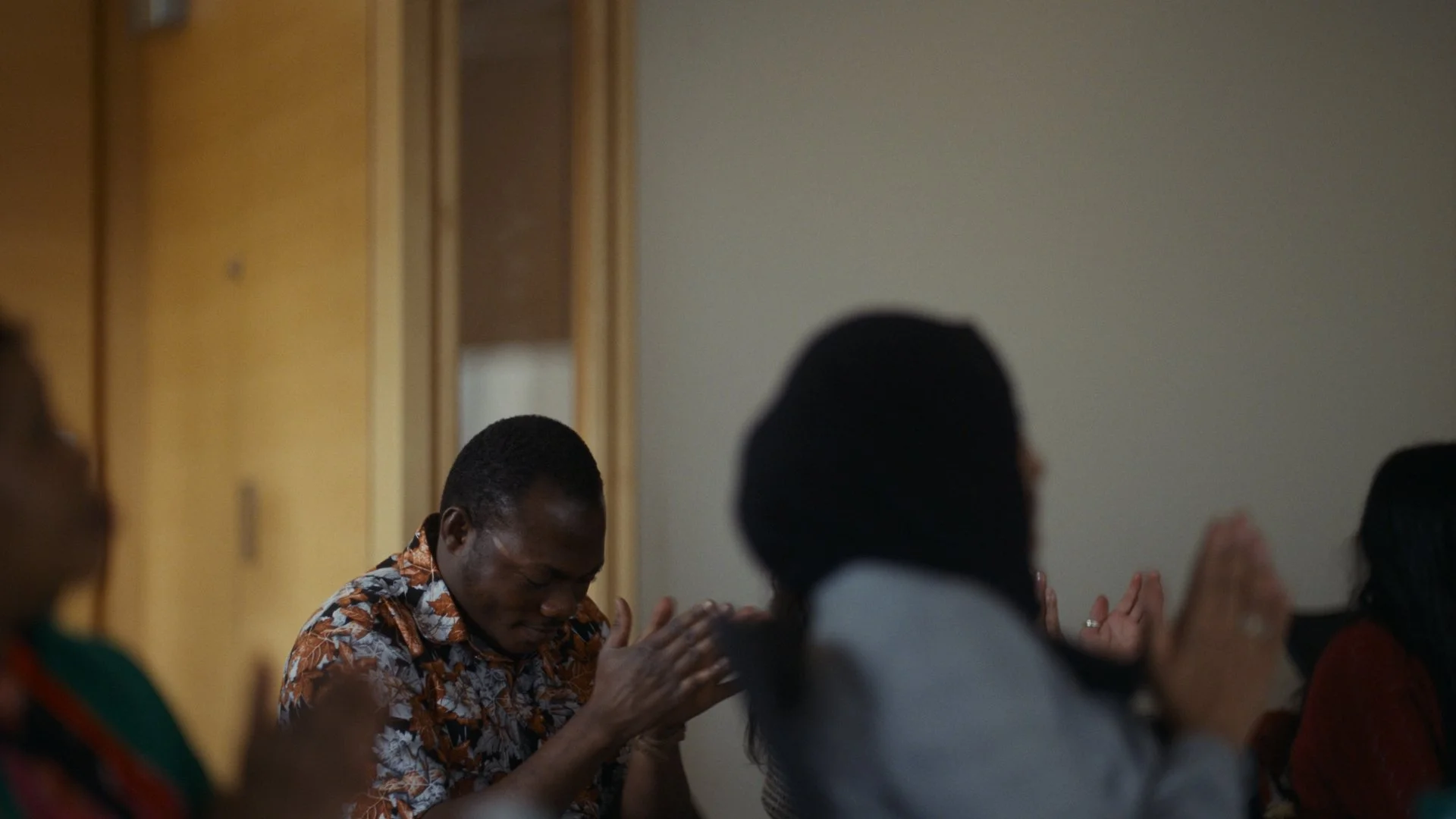
Conceptual events (CE) are facilitated, problem-based forums that deliberately bring together people holding conflicting "truth" perspectives on a critical problem, scientific, spiritual, indigenous, institutional, and work them toward an ethically compelling, shared framework for understanding it differently. The output is not a consensus for its own sake, it is a jointly authored account of a problem that none of the original perspectives could have produced alone.
Moral entrepreneurs are trusted, accountable local leaders whose authority isn't formal but is real, people who act on behalf of the community rather than for themselves. We don't import leadership. We identify who already holds it, and design programming to work through that existing structure rather than build a parallel one.
Translational research is usually scientific evidence and indigenous knowledge are usually treated as competitors. We treat them as two evidentiary systems that have to be threaded together to produce an intervention anyone will actually adopt. This is where the Method was proven: working with traditional healers in Zimbabwe to reconcile biomedical HIV transmission risk with existing therapeutic practice, and years of dialogue with interfaith leaders in Malawi that ultimately produced consensus, across Christian and Muslim leadership on condom use as HIV prevention.